
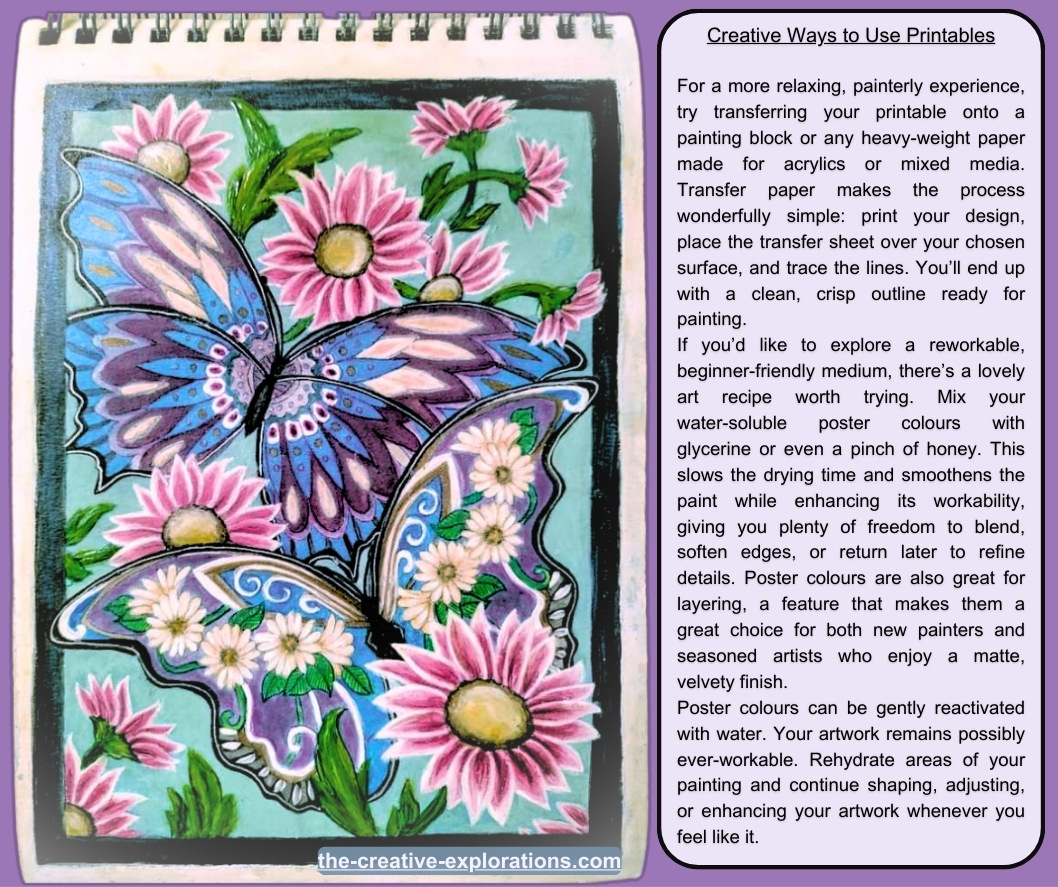


A gentle mixed-media recipe for relaxed creative practice

Printables are a wonderful starting point for creative work. Especially when you want to focus on colour, mood, and expression rather than drawing from scratch. One great them is by painting those free printables with poster colours. Why? Because, unlike watercolours or heavy acrylics, poster colours allow you to work freely on plain paper without warping, tearing, or damaging the paper. This makes them ideal for relaxed, exploratory sessions and for working directly inside journals or sketchbooks.
Why Poster Colours Work So Well on Plain Paper
One of the best things about poster colours is that they don’t need heavyweight paper. Since they stay on the surface instead of deep soaking into the paper structure, they let you work more freely and experiment with ease:
- Paint on standard sketchbook or printer paper
- Layer without buckling
- Work slowly and intuitively
- Keep your artwork light, portable, and stress-free
Of course, while poster colours work beautifully on plain paper, using art paper can enhance the final result when you’re aiming for more refined or layered artwork. Mixed-media or heavyweight paper allows for richer colour buildup, subtle texture effects, and repeated reworking without wear. If you’d like to push a piece further — add more layers, incorporate collage, or experiment with mark-making — art paper offers extra durability and depth while keeping the same forgiving, reactivatable nature of poster colours.

Poster Colours + Glycerine and/or Honey
Poster colours (also known as tempera or water-soluble poster paint) are opaque, matte, and easily reactivated with water, making them an excellent beginner painting medium and a versatile choice for art journaling. They are affordable, widely available, and easy to store, which is why they’re often included among essential art journaling supplies for both beginners and experienced artists.
When used straight from the jar, especially in lower-cost brands, poster paints can sometimes feel thick, chalky, or difficult to spread evenly. This can make blending challenging and limit painterly effects. However, with a small adjustment, poster colours become far more flexible and enjoyable to work with, allowing for smoother application, softer transitions, and layered effects. Simple poster paint techniques, such as modifying the paint with glycerine or honey, can dramatically improve flow and workability while preserving the paint’s reactivatable nature.
🎨 Poster Paint Recipe for Art Journaling & Mixed Media
This easy recipe turns ordinary poster colors into a rich, silky painting medium that’s a joy to work with — ideal for art journaling, creating beautiful printables, and enjoying relaxed, creative exploration.
What You’ll Need
- Poster colours (tempera or water-soluble poster paint)
- Clean water
- Glycerine or a tiny amount of honey
- A mixing palette or small dish
- Paintbrush
Step 1: Prepare the Paint
Place a small amount of poster colour onto your palette. Avoid mixing large quantities at once — a little goes a long way, and fresh mixtures perform best. (They can be re-used however after drying out, by softening with water.)
Step 2: Add Water
Add a few drops of water and mix gently until the paint reaches a creamy, spreadable consistency. The goal is to loosen the paint without making it transparent.
💡 Tip: Poster colours should remain opaque while flowing easily under the brush. Avoid using much water with poster colours.
Step 3: Add the Medium
Add 1–2 drops of glycerine, or the very tip of a toothpick dipped in honey.
Mix thoroughly.
This step:
- Slows drying time
- Reduces chalkiness
- Improves blending
- Creates smoother brushstrokes
⚠️ Use sparingly — too much can make the surface sticky.
Step 4: Test & Adjust
Test the paint on scrap paper:
- If it dries too fast → add one more drop of water
- If it feels rough or powdery → add a tiny bit more glycerine
- If it feels sticky → dilute with water and reduce additive next time
Step 5: Paint & Revisit
Apply the paint to:
- plain paper
- sketchbook pages
- printables
- mixed-media paper
Once dry, the surface can still be gently reactivated with water, allowing you to:
- soften edges
- blend layers
- lift colour
- return later to refine details
Optional Variations to Try
✨ For Softer Blends
Add slightly more water and work in thin layers, allowing each layer to dry before returning.
✨ For Texture & Depth
Apply thicker paint in some areas, then lightly reactivate with a damp brush once dry.
✨ For Mixed Media
Combine poster colours with:
- coloured pencils
- graphite
- ink lines
- white gel pen highlights
This simple poster paint recipe makes art journaling more accessible, flexible, and forgiving — especially when working with printables or lightweight paper. It encourages experimentation without pressure and supports a slow, exploratory creative process.
Using Poster colours with Free Printables

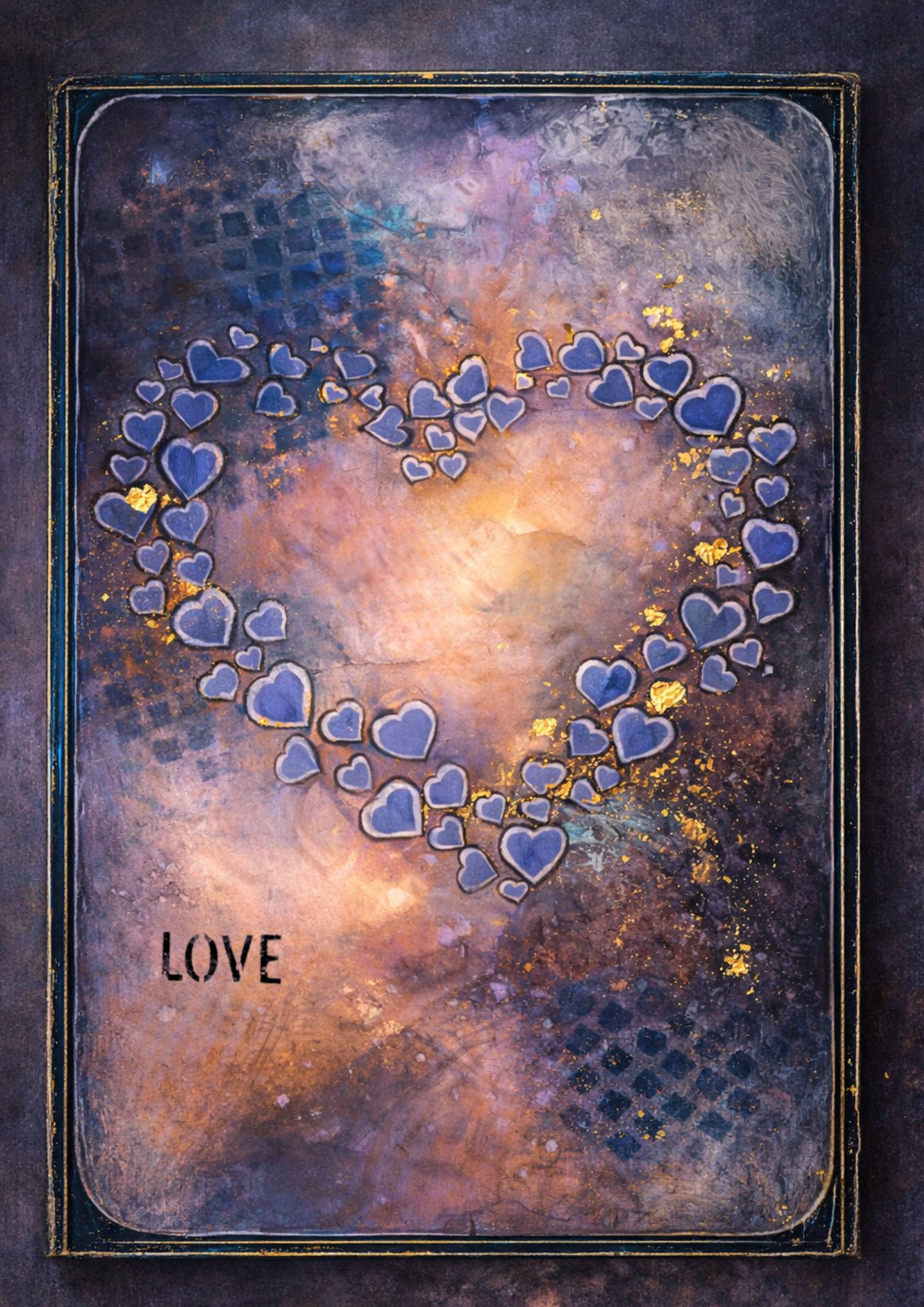
Using poster colours in this way pairs beautifully with printables, especially when you want a calm starting point that still leaves space for personal expression. A light outline or transferred design can support the process, while colour, layering, and texture make each page entirely your own.
If you’d like to try this approach yourself, you can find free printable designs available through the newsletter — shared as a creative welcome and intended for relaxed, exploratory use in art journals, sketchbooks, or mixed-media pages.
More ideas on how to use printables, along with art journaling techniques and behind-the-scenes creative experiments, will follow in upcoming posts.
Sometimes all it takes is a simple page, a forgiving medium, and a little time to let the process unfold.

In the next post, we’ll explore art journaling as an artist tool, looking at how techniques like these fit into a wider creative process. From mixed media experimentation and layering to reflection and visual storytelling, art journaling offers a flexible space where ideas can develop naturally — without pressure for a finished or polished result.
Using the poster colour recipe shared here gives you a versatile, beginner-friendly art medium that can be easily incorporated into art journaling. Because poster colours work well on plain and lightweight paper, they’re ideal for journals, sketchbooks, and art books that aren’t necessarily designed for heavy paint or wet techniques. This makes them especially useful for exploratory pages, creative studies, and everyday visual journaling.
More creative ideas, techniques, and inspiration are on the way.
Stay tuned — and feel free to join us on Facebook and YouTube for upcoming posts, creative recaps, and future tutorials.
Thank you for visiting!










Leave a Reply